 Add to Chrome
 Add to Firefox
 Add to Edge
PaperX: A Unified Framework for Multimodal Academic Presentation Generation with Scholar DAG
Feb 05, 2026
Transforming scientific papers into multimodal presentation content is essential for research dissemination but remains labor intensive. Existing automated solutions typically treat each format as an isolated downstream task, leading to redundant processing and semantic inconsistency. We introduce PaperX, a unified framework that models academic presentation generation as a structural transformation and rendering process. Central to our approach is the Scholar DAG, an intermediate representation that decouples the paper's logical structure from its final presentation syntax. By applying adaptive graph traversal strategies, PaperX generates diverse, high quality outputs from a single source. Comprehensive evaluations demonstrate that our framework achieves the state of the art performance in content fidelity and aesthetic quality while significantly improving cost efficiency compared to specialized single task agents.

ShotFinder: Imagination-Driven Open-Domain Video Shot Retrieval via Web Search
Jan 30, 2026In recent years, large language models (LLMs) have made rapid progress in information retrieval, yet existing research has mainly focused on text or static multimodal settings. Open-domain video shot retrieval, which involves richer temporal structure and more complex semantics, still lacks systematic benchmarks and analysis. To fill this gap, we introduce ShotFinder, a benchmark that formalizes editing requirements as keyframe-oriented shot descriptions and introduces five types of controllable single-factor constraints: Temporal order, Color, Visual style, Audio, and Resolution. We curate 1,210 high-quality samples from YouTube across 20 thematic categories, using large models for generation with human verification. Based on the benchmark, we propose ShotFinder, a text-driven three-stage retrieval and localization pipeline: (1) query expansion via video imagination, (2) candidate video retrieval with a search engine, and (3) description-guided temporal localization. Experiments on multiple closed-source and open-source models reveal a significant gap to human performance, with clear imbalance across constraints: temporal localization is relatively tractable, while color and visual style remain major challenges. These results reveal that open-domain video shot retrieval is still a critical capability that multimodal large models have yet to overcome.
TopoSculpt: Betti-Steered Topological Sculpting of 3D Fine-grained Tubular Shapes
Sep 04, 2025Medical tubular anatomical structures are inherently three-dimensional conduits with lumens, enclosing walls, and complex branching topologies. Accurate reconstruction of their geometry and topology is crucial for applications such as bronchoscopic navigation and cerebral arterial connectivity assessment. Existing methods often rely on voxel-wise overlap measures, which fail to capture topological correctness and completeness. Although topology-aware losses and persistent homology constraints have shown promise, they are usually applied patch-wise and cannot guarantee global preservation or correct geometric errors at inference. To address these limitations, we propose a novel TopoSculpt, a framework for topological refinement of 3D fine-grained tubular structures. TopoSculpt (i) adopts a holistic whole-region modeling strategy to capture full spatial context, (ii) first introduces a Topological Integrity Betti (TIB) constraint that jointly enforces Betti number priors and global integrity, and (iii) employs a curriculum refinement scheme with persistent homology to progressively correct errors from coarse to fine scales. Extensive experiments on challenging pulmonary airway and Circle of Willis datasets demonstrate substantial improvements in both geometry and topology. For instance, $\beta_{0}$ errors are reduced from 69.00 to 3.40 on the airway dataset and from 1.65 to 0.30 on the CoW dataset, with Tree length detected and branch detected rates improving by nearly 10\%. These results highlight the effectiveness of TopoSculpt in correcting critical topological errors and advancing the high-fidelity modeling of complex 3D tubular anatomy. The project homepage is available at: https://github.com/Puzzled-Hui/TopoSculpt.
Shape-aware Sampling Matters in the Modeling of Multi-Class Tubular Structures
Jun 14, 2025Accurate multi-class tubular modeling is critical for precise lesion localization and optimal treatment planning. Deep learning methods enable automated shape modeling by prioritizing volumetric overlap accuracy. However, the inherent complexity of fine-grained semantic tubular shapes is not fully emphasized by overlap accuracy, resulting in reduced topological preservation. To address this, we propose the Shapeaware Sampling (SAS), which optimizes patchsize allocation for online sampling and extracts a topology-preserved skeletal representation for the objective function. Fractal Dimension-based Patchsize (FDPS) is first introduced to quantify semantic tubular shape complexity through axis-specific fractal dimension analysis. Axes with higher fractal complexity are then sampled with smaller patchsizes to capture fine-grained features and resolve structural intricacies. In addition, Minimum Path-Cost Skeletonization (MPC-Skel) is employed to sample topologically consistent skeletal representations of semantic tubular shapes for skeleton-weighted objective functions. MPC-Skel reduces artifacts from conventional skeletonization methods and directs the focus to critical topological regions, enhancing tubular topology preservation. SAS is computationally efficient and easily integrable into optimization pipelines. Evaluation on two semantic tubular datasets showed consistent improvements in both volumetric overlap and topological integrity metrics.
Temporal Differential Fields for 4D Motion Modeling via Image-to-Video Synthesis
May 22, 2025Temporal modeling on regular respiration-induced motions is crucial to image-guided clinical applications. Existing methods cannot simulate temporal motions unless high-dose imaging scans including starting and ending frames exist simultaneously. However, in the preoperative data acquisition stage, the slight movement of patients may result in dynamic backgrounds between the first and last frames in a respiratory period. This additional deviation can hardly be removed by image registration, thus affecting the temporal modeling. To address that limitation, we pioneeringly simulate the regular motion process via the image-to-video (I2V) synthesis framework, which animates with the first frame to forecast future frames of a given length. Besides, to promote the temporal consistency of animated videos, we devise the Temporal Differential Diffusion Model to generate temporal differential fields, which measure the relative differential representations between adjacent frames. The prompt attention layer is devised for fine-grained differential fields, and the field augmented layer is adopted to better interact these fields with the I2V framework, promoting more accurate temporal variation of synthesized videos. Extensive results on ACDC cardiac and 4D Lung datasets reveal that our approach simulates 4D videos along the intrinsic motion trajectory, rivaling other competitive methods on perceptual similarity and temporal consistency. Codes will be available soon.
Ordered-subsets Multi-diffusion Model for Sparse-view CT Reconstruction
May 15, 2025Score-based diffusion models have shown significant promise in the field of sparse-view CT reconstruction. However, the projection dataset is large and riddled with redundancy. Consequently, applying the diffusion model to unprocessed data results in lower learning effectiveness and higher learning difficulty, frequently leading to reconstructed images that lack fine details. To address these issues, we propose the ordered-subsets multi-diffusion model (OSMM) for sparse-view CT reconstruction. The OSMM innovatively divides the CT projection data into equal subsets and employs multi-subsets diffusion model (MSDM) to learn from each subset independently. This targeted learning approach reduces complexity and enhances the reconstruction of fine details. Furthermore, the integration of one-whole diffusion model (OWDM) with complete sinogram data acts as a global information constraint, which can reduce the possibility of generating erroneous or inconsistent sinogram information. Moreover, the OSMM's unsupervised learning framework provides strong robustness and generalizability, adapting seamlessly to varying sparsity levels of CT sinograms. This ensures consistent and reliable performance across different clinical scenarios. Experimental results demonstrate that OSMM outperforms traditional diffusion models in terms of image quality and noise resilience, offering a powerful and versatile solution for advanced CT imaging in sparse-view scenarios.
Multi-Class Segmentation of Aortic Branches and Zones in Computed Tomography Angiography: The AortaSeg24 Challenge
Feb 07, 2025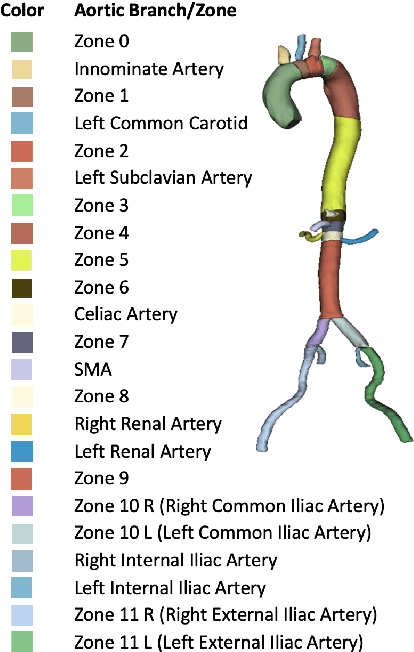
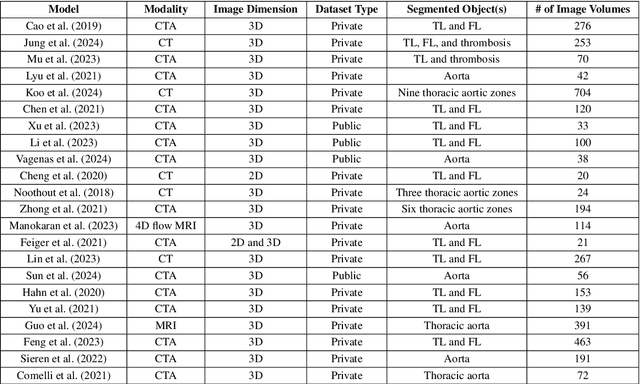
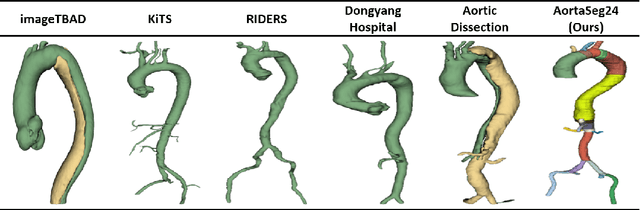
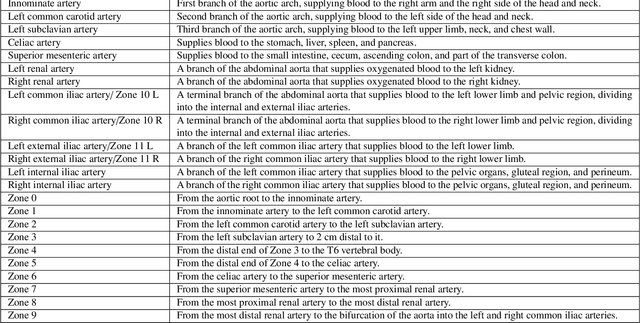
Multi-class segmentation of the aorta in computed tomography angiography (CTA) scans is essential for diagnosing and planning complex endovascular treatments for patients with aortic dissections. However, existing methods reduce aortic segmentation to a binary problem, limiting their ability to measure diameters across different branches and zones. Furthermore, no open-source dataset is currently available to support the development of multi-class aortic segmentation methods. To address this gap, we organized the AortaSeg24 MICCAI Challenge, introducing the first dataset of 100 CTA volumes annotated for 23 clinically relevant aortic branches and zones. This dataset was designed to facilitate both model development and validation. The challenge attracted 121 teams worldwide, with participants leveraging state-of-the-art frameworks such as nnU-Net and exploring novel techniques, including cascaded models, data augmentation strategies, and custom loss functions. We evaluated the submitted algorithms using the Dice Similarity Coefficient (DSC) and Normalized Surface Distance (NSD), highlighting the approaches adopted by the top five performing teams. This paper presents the challenge design, dataset details, evaluation metrics, and an in-depth analysis of the top-performing algorithms. The annotated dataset, evaluation code, and implementations of the leading methods are publicly available to support further research. All resources can be accessed at https://aortaseg24.grand-challenge.org.
A Digitalized Atlas for Pulmonary Airway
Dec 15, 2024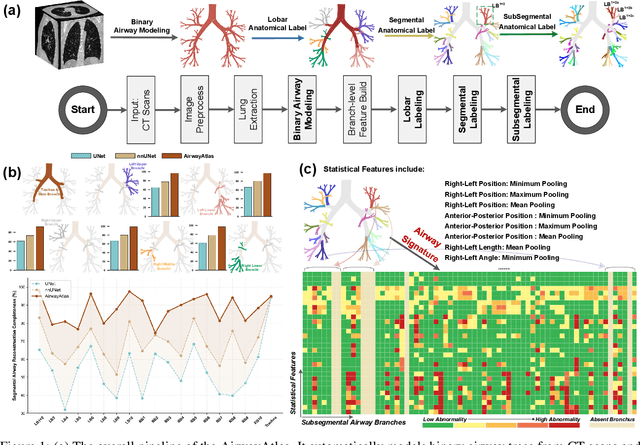

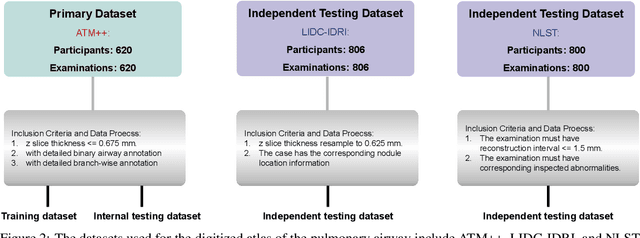
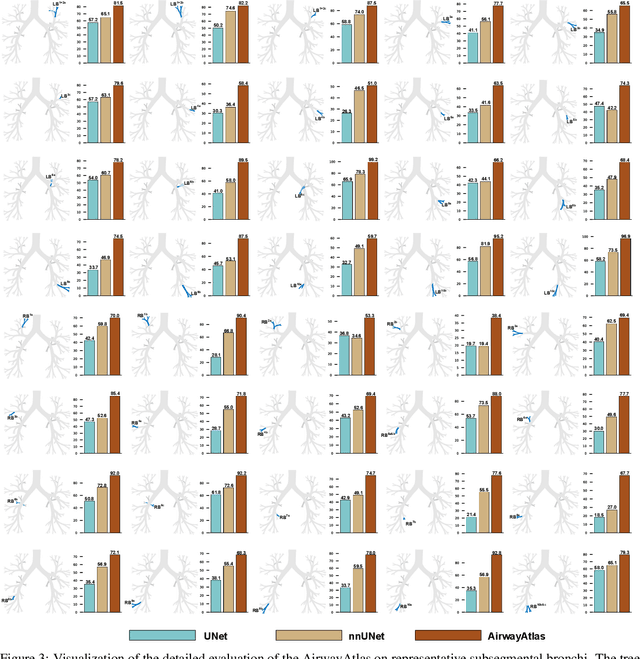
In this work, we proposed AirwayAtlas, which is an end-to-end pipeline for automatic extraction of airway anatomies with lobar, segmental and subsegmental labeling. A compact representation, AirwaySign, is generated based on diverse features of airway branches. Experiments on multi-center datasets validated the effectiveness of AirwayAtlas. We also demonstrated that AirwaySign is a powerful tool for correlation analysis on pulmonary diseases.
Airway Labeling Meets Clinical Applications: Reflecting Topology Consistency and Outliers via Learnable Attentions
Oct 31, 2024
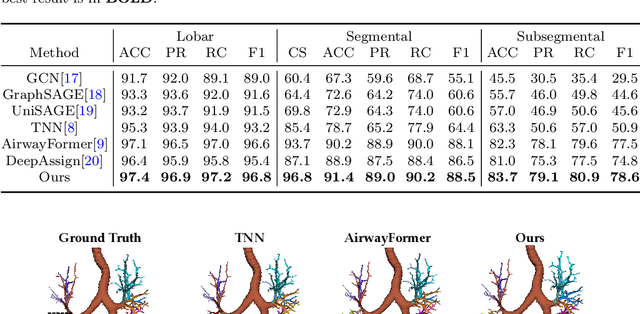

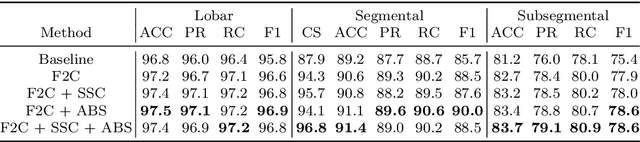
Accurate airway anatomical labeling is crucial for clinicians to identify and navigate complex bronchial structures during bronchoscopy. Automatic airway anatomical labeling is challenging due to significant individual variability and anatomical variations. Previous methods are prone to generate inconsistent predictions, which is harmful for preoperative planning and intraoperative navigation. This paper aims to address these challenges by proposing a novel method that enhances topological consistency and improves the detection of abnormal airway branches. We propose a novel approach incorporating two modules: the Soft Subtree Consistency (SSC) and the Abnormal Branch Saliency (ABS). The SSC module constructs a soft subtree to capture clinically relevant topological relationships, allowing for flexible feature aggregation within and across subtrees. The ABS module facilitates the interaction between node features and prototypes to distinguish abnormal branches, preventing the erroneous aggregation of features between normal and abnormal nodes. Evaluated on a challenging dataset characterized by severe airway distortion and atrophy, our method achieves superior performance compared to state-of-the-art approaches. Specifically, it attains a 91.4% accuracy at the segmental level and an 83.7% accuracy at the subsegmental level, representing a 1.4% increase in subsegmental accuracy and a 3.1% increase in topological consistency. Notably, the method demonstrates reliable performance in cases with disease-induced airway deformities, ensuring consistent and accurate labeling.
Topology-Aware Exploration of Circle of Willis for CTA and MRA: Segmentation, Detection, and Classification
Oct 21, 2024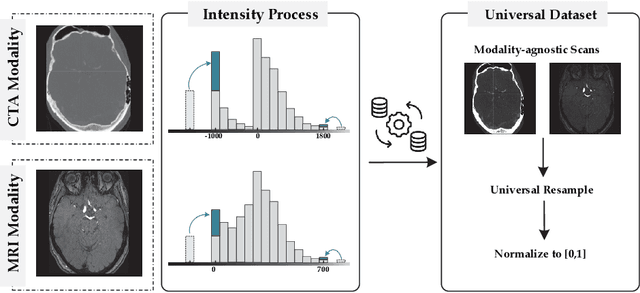
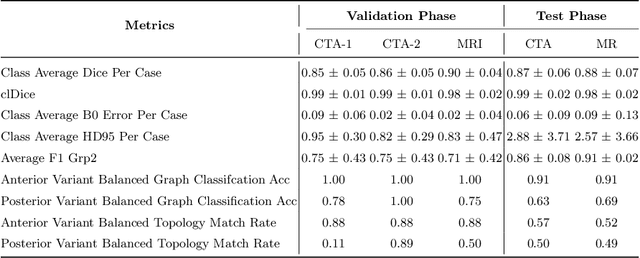
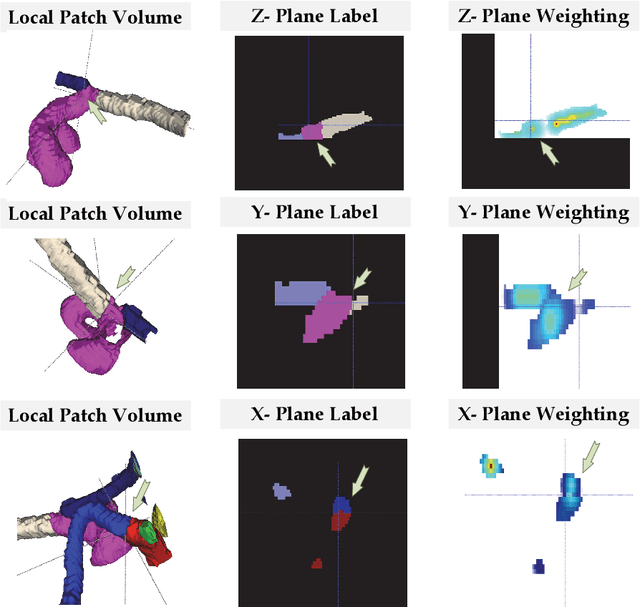
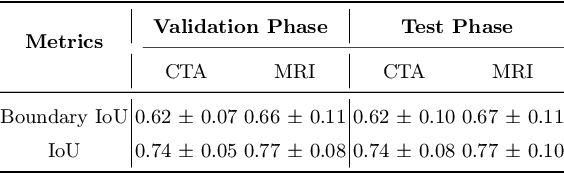
The Circle of Willis (CoW) vessels is critical to connecting major circulations of the brain. The topology of the vascular structure is clinical significance to evaluate the risk, severity of the neuro-vascular diseases. The CoW has two representative angiographic imaging modalities, computed tomography angiography (CTA) and magnetic resonance angiography (MRA). TopCow24 provided 125 paired CTA-MRA dataset for the analysis of CoW. To explore both CTA and MRA images in a unified framework to learn the inherent topology of Cow, we construct the universal dataset via independent intensity preprocess, followed by joint resampling and normarlization. Then, we utilize the topology-aware loss to enhance the topology completeness of the CoW and the discrimination between different classes. A complementary topology-aware refinement is further conducted to enhance the connectivity within the same class. Our method was evaluated on all the three tasks and two modalities, achieving competitive results. In the final test phase of TopCow24 Challenge, we achieved the second place in the CTA-Seg-Task, the third palce in the CTA-Box-Task, the first place in the CTA-Edg-Task, the second place in the MRA-Seg-Task, the third palce in the MRA-Box-Task, the second place in the MRA-Edg-Task.